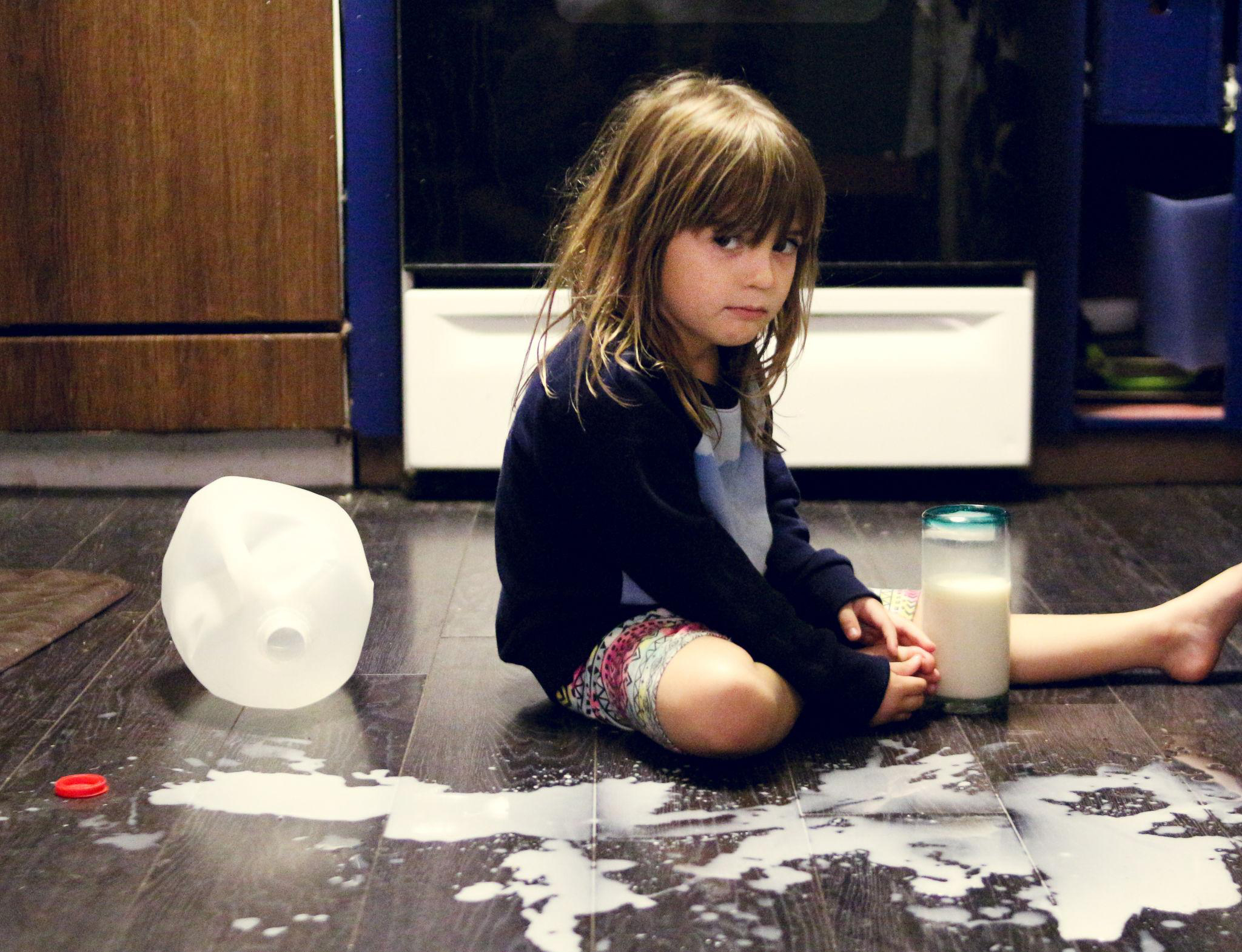
There’s a very specific parenting moment that tends to arrive quietly… and then land with a thud. You ask a simple question: “Did you spill the juice?” Your child, standing in a small lake of apple juice, looks you directly in the eye and says: “No.”
And just like that, something shifts. Not because they made a mess. You’ve seen plenty of those. But because this is new. Intentional. Almost… strategic. Your child has discovered the idea of not telling the truth.
Before panic sets in, take a breath. This moment, as surprising as it feels, is actually a sign of something important happening under the surface.
Why Kids Lie (and Why It’s Not What You Think)
Young children don’t lie the way adults do. They lack guile and are not acting maliciously. There’s no master plan, no long con, no moral crisis unfolding behind their eyes. Instead, lying often shows up as a developmental milestone. For you, a lie is manipulation; for your child, it’s the very first lesson in controlling their own fate. Your child isn’t learning to be a liar (unless that’s what’s being taught); they’re learning how honesty works for the first time.
“I Wish This Were True” Thinking
In early childhood, imagination and reality overlap like watercolor paints. Sometimes a child says something untrue because they want it to be true. “I didn’t eat the cookie.” Translation: I wish I hadn’t… or I wish I could have another without consequences.
Avoiding Trouble
This is the version parents recognize instantly.
Kids quickly learn:
- Actions → consequences
- Consequences → unpleasant
So they experiment with a new variable: “What if I say something different happened?” This isn’t manipulation. It’s problem-solving… just not very advanced yet, and without understanding the cost in a relationship for breaking trust.
Testing Boundaries (Social Experiment Mode)
Preschoolers are constantly asking:
- What happens if I say this?
- Will they believe me?
- Does this change the outcome?
They’re not just learning rules. They’re learning how people work.
Learned Behavior
Children are extraordinary observers. They notice when adults:
- Tell “little white lies” (“Tell them I’m not home”)
- Change their story
- Soften the truth to avoid discomfort
Even when we think they aren’t paying attention, they are collecting data.
What Child Development Research Says
Around ages 3–5, children begin developing what psychologists call theory of mind—the understanding that other people have thoughts and beliefs different from their own. This is the cognitive leap that makes lying possible. If I know you don’t know what I know… I can tell you something else.
According to research summarized by:
- Talwar & Lee (2008), Social and Cognitive Correlates of Children’s Lying Behavior
- Kang Lee, University of Toronto (child honesty research)
Young children’s first lies are often clumsy, inconsistent, and easy to detect. Which is actually reassuring. It means they’re still learning how truth, trust, and communication work.
What Not To Do (Even Though It’s Tempting)
When a child lies, it can feel personal. Disrespectful. Even alarming. But big reactions can accidentally teach the wrong lesson.
Avoid:
- Harsh punishment → teaches fear, not honesty
- “I know you’re lying!” confrontations → invites doubling down
- Labeling (“You’re a liar”) → turns behavior into identity
If the goal is honesty, the environment has to feel safe enough for truth to exist.
What Actually Helps
Lower the Stakes for Telling the Truth
Making consequences more dire feels like a means to getting a more direct result. But if telling the truth always leads to big consequences, kids will look for exits. Try: “If you tell me the truth, we’ll figure it out together.”
It is desperately important that a parent makes good on this promise. You’re not establishing rules, you’re extending trust to get trust. If that trust breaks, your child will see this and remember this lesson as a negative one.
Focus on Repair, Not Just the Lie
Instead of stopping at “Why did you lie?,” shift to “What can we do to fix what happened?” This builds responsibility without shame, and illustrates that you are always on the same team as your child, even if there are consequences to face.
The Boy Who Cried Wolf
At some point, many of us reach for a classic: The Boy Who Cried Wolf. It feels like the perfect teaching tool. A clear message, a memorable storyline, a built-in moral about honesty and trust.
But here’s the catch: for younger children, especially in the preschool years, the story doesn’t always land the way we think it does. At this stage, children are still developing:
- The ability to connect actions to long-term consequences
- A clear separation between imagination and reality
- An understanding of why honesty matters in relationships
So when they hear the story, they may focus on:
- The drama (“There’s a wolf!”)
- The repetition (calling for help again and again)
- Or even just the idea of getting attention
The deeper moral- that lying erodes trust over time- can be harder to grasp.
What Starts to Click
As children approach kindergarten, something shifts. They begin to understand:
- That other people rely on what we say
- That trust can be built… and broken
- That actions have consequences beyond the immediate moment
This is when the idea behind The Boy Who Cried Wolf starts to make more sense.
The Part We Don’t Always Talk About
There’s also the ending. In many versions, the consequence is stark. When the wolf actually comes, no one believes the boy… and the outcome is severe. For a young child, that can feel less like a lesson and more like:
- Confusing
- Frightening
- Or disproportionately intense
It’s a very big consequence attached to a very early developmental stage.
Gentler Ways to Teach the Same Lesson
The goal isn’t to avoid teaching honesty. It’s to match the lesson to where children are. For ages 3–5, stories that focus on small, relatable consequences, repairing mistakes, and rebuilding trust tend to work better.
A few great book options:
- Lying Up a Storm
A playful, age-appropriate look at how lies can grow and spiral. - Ruthie and the (Not So) Teeny Tiny Lie
A gentle story about guilt, courage, and telling the truth. - Howard B. Wigglebottom and the Monkey on His Back
Focuses on habits, honesty, and making better choices.
These stories keep the stakes understandable and give children something even more important than fear: a path back.
The Big Picture
Classic fables have their place. Their messages are powerful and enduring. But for preschoolers, honesty isn’t learned through fear of worst-case outcomes. It’s learned through:
- Safe conversations
- Gentle guidance
- And repeated chances to try again
Because at this age, children aren’t choosing between truth and deception in a moral sense. They’re learning how honesty works.
And that lesson, when taught with care, tends to stick far longer than any wolf ever could.
Model Radical Honesty (Even the Small Stuff)
Kids notice consistency. When adults admit mistakes, tell the truth (even when inconvenient), and avoid “performative honesty”, children absorb that honesty is normal, not risky.
Call Out Truth-Telling When You See It
Honesty is a skill that grows with reinforcement. “Thank you for telling me the truth. That was really brave.” That moment matters more than catching a lie.
A Different Way to See It
That first lie isn’t the beginning of a problem. It’s the beginning of something more nuanced:
- Understanding other minds
- Testing cause and effect in relationships
- Navigating consequences
- Learning where truth fits in all of it
In other words, your child isn’t becoming dishonest. They’re becoming socially aware. And like everything else at this age, they need practice, guidance… and a soft place to land when they get it wrong.
If you’d like to discuss a place for your kids at Creekside Kids, click this embedded link to schedule an appointment. Let’s get to know each other! Like us on Facebook to follow our stories for news and updates. We’re located at 1201 W Cheyenne Road, Colorado Springs, CO 80906, and we can be reached at (719) 635-9111. Our hours of operation are 6:45 a.m. to 5:45 p.m., Monday through Friday.
References & Further Reading
- Talwar, V., & Lee, K. (2008). Social and Cognitive Correlates of Children’s Lying Behavior
- Kang Lee, University of Toronto – Child honesty and development research
- American Academy of Pediatrics: Emotional and Social Development in Early Childhood
- Zero to Three: Why Toddlers Lie
- Harvard Center on the Developing Child: Executive Function & Self-Regulation
- Psychology Today: Why Children Lie and What to Do About It
 1201 W Cheyenne Rd