Creekside Kids

(719) 635-9111
  • Home
  • About
    • Our Philosophy
    • Our Co-Learners
    • Testimonials
  • Programs
    • Programs and Curriculum
    • Summer Camp 2026
  • Resources
    • Policies
    • Registration
    • Tuition
  • News / Blogs
  • Contact

May 1, 2026 by Christopher Hooker

Tiny Feelings, Big Lessons: Helping Preschoolers Navigate Their First Big Emotions

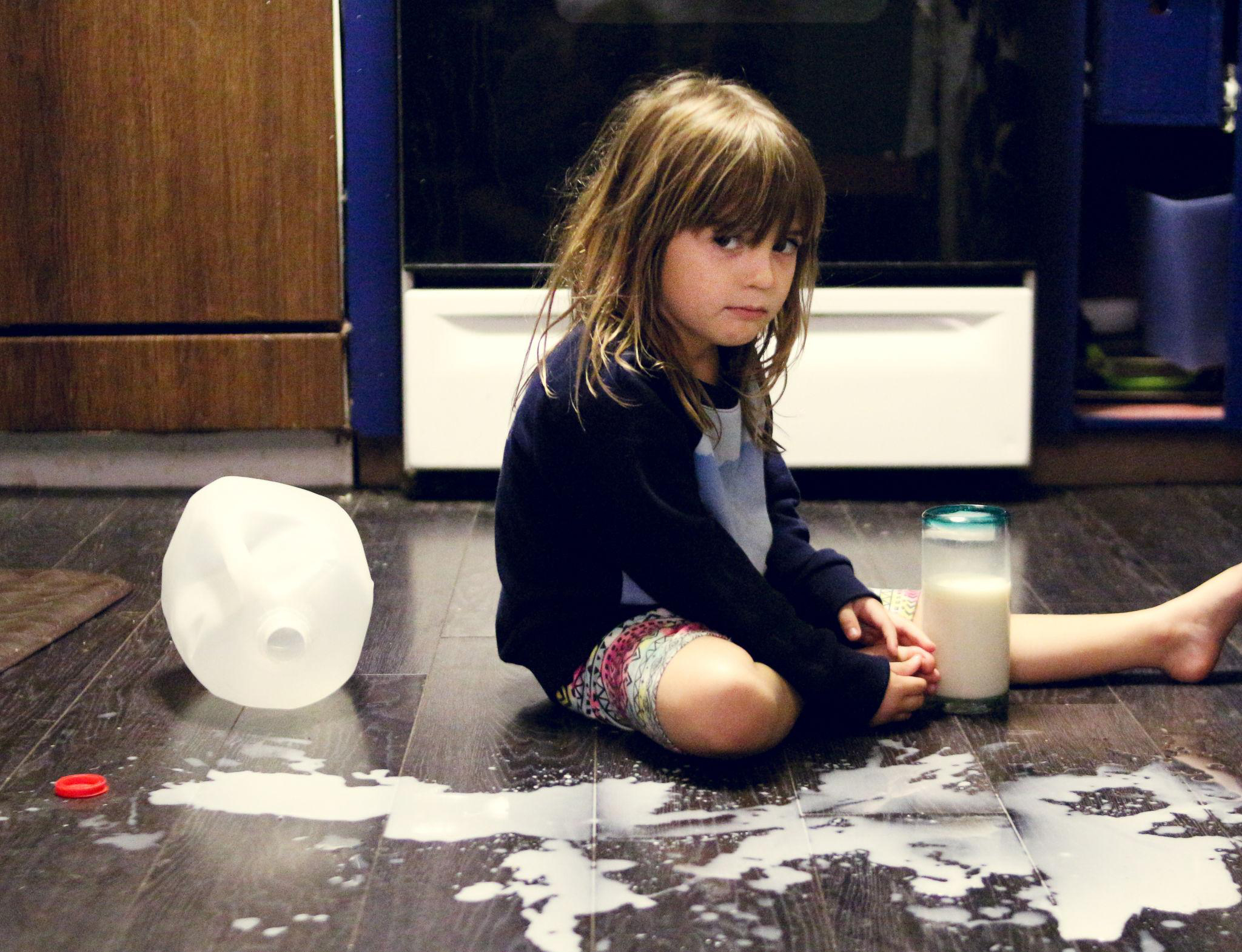
There’s a particular kind of moment that tends to sneak up on parents. It might look small from the outside—a toy taken, a goodbye at drop-off, a spilled cup—but suddenly your child’s whole world tilts. Tears come fast. Voices rise. Logic quietly exits the room.

And there you are, standing at the edge of a very big feeling in a very small person. These moments can feel overwhelming, but they are also something else: the beginning of emotional learning. And while they represent a challenge in the immediate moment, they are also an opportunity to help your child process the big moments they aren’t prepared for yet.

🌱 The First Draft of Feelings

Preschoolers are just starting to build what psychologists call emotional regulation—the ability to understand and manage feelings. But early on, those skills are still under construction.

Research in early childhood development shows that young children experience emotions intensely but don’t yet have the tools to process or express them clearly. So when your child melts down because someone else is using the blue marker, it’s not really about the marker.

It’s about:

  • Disappointment
  • Lack of control
  • Not yet having the words to say, “That mattered to me”

To adults, it’s a moment. To them, it’s the whole sky.

🧭 What Children Need in These Moments

When emotions run high, children aren’t looking for explanations or corrections right away. They’re looking for connection.

One widely supported approach in child psychology, often called emotion coaching, suggests that children learn best when adults first acknowledge feelings before guiding behavior. Research by John Gottman and colleagues found that this approach helps children develop stronger emotional awareness and self-regulation over time.

In practice, that can look surprisingly simple.

🧩 Small Words, Big Impact

Here are a few gentle ways to respond in the moment:

  • “That was really important to you.”
  • “You didn’t like that.”
  • “It’s hard when things don’t go the way you wanted.”
  • “I’m right here with you.”

These phrases don’t “fix” the feeling. They make space for it. And that space is where learning begins.

🛠️ After the Storm: Teaching Comes Later

In the middle of a meltdown, a child’s brain is in survival mode. Reasoning, problem-solving, and listening take a back seat. But once the storm passes—once breathing slows and the world feels steady again—that’s when you can gently build skills.

You might say:

  • “Next time, you can say ‘I’m still using that.’”
  • “Let’s think of another way to solve that problem.”
  • “What could we try if that happens again?”
  • “Would you like to know what other kids do/say when they are upset?”

This is where children begin connecting feelings to actions.

🌿 The Power of Naming Feelings

One of the simplest, most powerful tools you can offer is language. Studies suggest that naming emotions helps children begin to regulate them—a process sometimes called “name it to tame it.”

You might notice:

  • “You look frustrated.”
  • “That felt disappointing.”
  • “You were excited, and then it changed.”

Over time, children start borrowing this language. And eventually, they begin to use it on their own.


🧺 What This Looks Like in Real Life

Of course, real life rarely unfolds in calm, picture-perfect moments.

Sometimes:

  • You’re late
  • The grocery cart is half full
  • The meltdown is happening in public

And in those moments, “perfect” responses aren’t the goal. Consistency is. Even one small, steady phrase—“I’m here”—repeated over time, becomes something your child can rely on.

🌄 Growing Through the Firsts

Preschoolers experience so many “firsts”:

  • First friendships
  • First conflicts
  • First goodbyes
  • First moments of feeling misunderstood

Each one brings a wave of emotion. And each one is also a chance to learn:

  • Feelings can be handled
  • Big emotions are not dangerous
  • Someone safe will stay nearby

🌼 A Gentle Reframe

It’s easy to see emotional moments as disruptions. But they are also rehearsals.

Each tearful moment, each frustrated stomp, each “I can’t!” is part of your child practicing how to be human. And your role isn’t to eliminate those feelings. It’s to walk alongside them as they learn to carry them. 

If you’d like to discuss a place for your kids at Creekside Kids, click this embedded link to schedule an appointment. Let’s get to know each other! Like us on Facebook to follow our stories for news and updates. We’re located at 1201 W Cheyenne Road, Colorado Springs, CO 80906, and we can be reached at (719) 635-9111. Our hours of operation are 6:45 a.m. to 5:45 p.m., Monday through Friday.

📚 References & Inspiration

  • Center on the Developing Child, Harvard University — Emotional Development in Early Childhood
  • The Whole-Brain Child by Daniel J. Siegel and Tina Payne Bryson
  • Raising an Emotionally Intelligent Child by John Gottman
  • American Academy of Pediatrics — Guidance on emotional development and regulation in early childhood

Filed Under: Parents Tips Tagged With: connection, emotions, tantrum

April 10, 2026 by Christopher Hooker

Scripts That Actually Work (When Your Preschooler Absolutely Will Not)

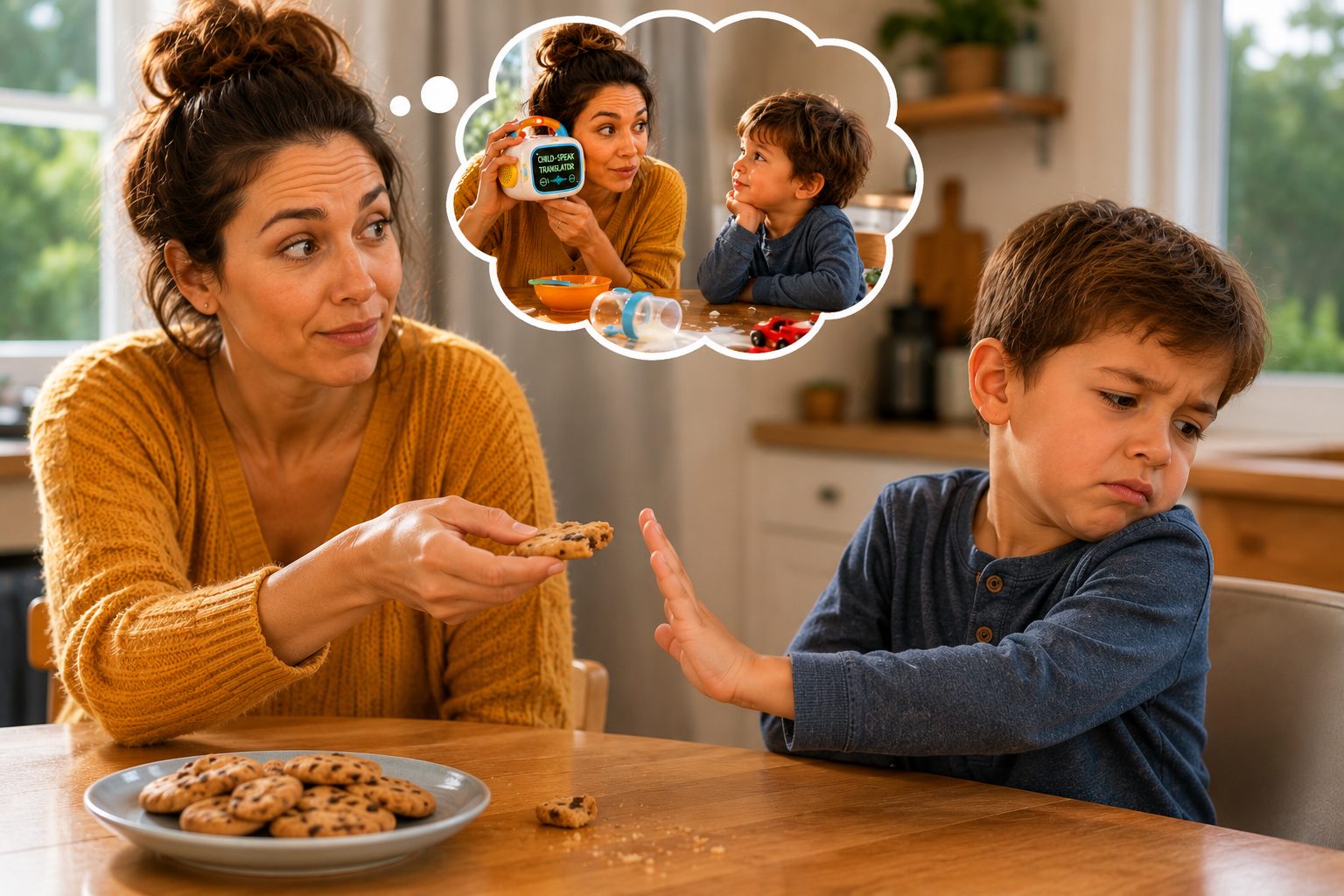
There’s a moment every parent knows: your preschooler is on the floor, emotions turned up to maximum volume, and your brain… goes blank. You meant to be calm. You meant to say the right thing. Instead, you’re standing there holding a granola bar and questioning your entire life.

That’s where simple scripts can help—not as magic spells, but as anchors.

During a meltdown, your preschooler isn’t looking for a speech. Research shows that when children are overwhelmed, reasoning and language often don’t go as we hope.

So the goal isn’t to say more. It’s to say less, better, and calmer.

Let’s build a few go-to scripts you can stick on your fridge (or keep in your back pocket like emotional snacks).

First, a Mindset Shift: Scripts Are Starters, Not Spells

Think of scripts like trail markers, not GPS directions. Signposts that help you know which way to turn in a challenging conversation. Scripts help you respond instead of react, keep your language calm and consistent, and model emotional regulation over time. But they are not guaranteed to “fix” behavior instantly. Toddlers are learning, not performing.

Scenario 1: Tantrums (The Emotional Storm)

During a tantrum, your preschooler’s brain doesn’t allow for logical thinking. The primary objective is to calm your child before attempting to educate them.

To make these scripts easy to use during tough moments, here are some simple phrases parents can say to help their preschoolers feel supported and safe during meltdowns. Here are some suggested ‘fridge-worthy’ scripts that parents can adapt and utilize during challenging moments with their preschoolers:

  • “I’m here.”
  • “You’re safe.”
  • “I won’t let you hit.”
  • “I’ll stay with you.”

That’s it. Short. Steady. Repeatable.

Bonus (non-verbal counts!): a calm presence, a soft face, or sitting nearby can be more effective than talking.

What to avoid:

  • Long explanations
  • Rapid-fire questions
  • Trying to “solve” the feeling mid-storm

Think of it like trying to explain fractions during a fire alarm. In other words, that’s not the moment.

Scenario 2: Encouraging Sharing (Without Forcing It)

What’s really happening: preschoolers are wired for ownership, not generosity. Sharing is a learned skill, not something they are born with. And it may take some time and patience for them to understand the concept of sharing.

The goal: teach turn-taking without shame or force.

Fridge-worthy scripts:

  • “You’re using that. When you’re done, it’s their turn.”
  • “They want a turn. You can say ‘not yet.’”
  • “I won’t let you grab. Let’s wait.”

Why this works: you’re protecting your child’s sense of ownership, teaching boundaries and social skills, and reducing power struggles. Research shows preschoolers often struggle with emotional regulation, especially when autonomy is involved.

Scenario 3: Throwing Food / Mealtime Battles

What’s really happening: control. Toddlers are exploring their sense of control, driven by curiosity. At times, hunger motivates their behavior, while other times, they may be experiencing the opposite—feeling full or simply not interested in food.

The goal: stay neutral. Hold the boundary.

Fridge-worthy scripts:

  • “Food stays on the table.”
  • “If you throw, you’re telling me you’re done.”
  • “You don’t have to eat, but this is what we have.”

Why it works: clear, simple expectations reduce confusion and escalation.

Scenario 4: Transitions (Leaving the Park, Bedtime, etc.)

What’s really happening: your preschooler is being asked to give up something they love. Naturally, they object.

The goal: prepare, then follow through. Using a “this, then that” dialogue can help them understand that transition is more than moving away from something they love; it’s moving to something they also love.

Fridge-worthy scripts:

  • “Two more minutes, then we go.”
  • “It’s hard to leave. I’ll help you.”
  • “You can walk, or I can carry you.”

Why it works: predictability and limited choices reduce stress and resistance.

Scenario 5: Hitting, Biting, or Aggression

What’s really happening: big feelings + limited skills. Toddlers often experience intense emotions but have a limited ability to express them or to regulate their behavior effectively.

The goal: to set an immediate boundary and maintain a calm tone.

Fridge-worthy scripts:

  • “I won’t let you hit.”
  • “Hitting hurts.”
  • “You can be mad. I’ll help you stay safe.”

The delivery should be short and firm—no lecture.

The Secret Ingredient: Your Tone

Your preschooler learns more from your tone than your words. Delivering these scripts calmly and reassuringly is more impactful. Your child absorbs your emotional state and learns regulation through your consistent approach.

  • Calm voice = safety
  • Predictable words = security
  • Consistency = learning

Even when it doesn’t “work” right away, it’s working over time. Stay with it!

Keep It Simple (Your Sanity Matters Too)

If you remember nothing else, remember this:

During the storm:

  • Use fewer words
  • Lower your voice and keep your emotions in check
  • Utilize a slower energy

After the storm:

That’s when teaching, explaining, and connecting really happen.

A Gentle Reminder

Tantrums, power struggles, and “no” phases are not signs of failure. These are signs that your child is developing exactly as they should. As one expert insight puts it: preschoolers aren’t giving you a hard time—they’re having a hard time. And your calm, simple words? They become the voice they eventually use inside their own heads. If you’d like to discuss a place for your kids at Creekside Kids, click this embedded link to schedule an appointment. Let’s get to know each other! Like us on Facebook to follow our stories for news and updates. We’re located at 1201 W Cheyenne Road, Colorado Springs, CO 80906, and we can be reached at (719) 635-9111. Our hours of operation are 6:45 a.m. to 5:45 p.m., Monday through Friday.

Filed Under: Parents Tips Tagged With: meltdowns, regulation, scripts, Tantrums

March 1, 2026 by Christopher Hooker

Finding the Kindergarten That Fits Best

It’s already March, and it feels like this year is moving ahead fast. Our January wishes for warmer weather have cursed us with wonderful, favorable weather that denies us the snow (and water) Colorado Springs so desperately needs. And now, as we look ahead to our year, many of our parents have begun to consider and plan for the elementary school their child will start this September. Are you among them?

In our earlier article, The Right Kindergarten Model, we discussed one of the most important truths parents face when their child leaves daycare: there is no single “best kindergarten.” There is only one kindergarten that is best for your child. The right kindergarten helps develop social and emotional awareness, academic skills, and confidence while matching how your child naturally learns and grows.

Kindergarten is more than a milestone. It is the foundation of a child’s relationship with learning itself. Choosing wisely can promote curiosity, resilience, and adaptability. Choosing poorly can create frustration, anxiety, or withdrawal. The goal is not to find the most entertaining, most academically intense, or most prestigious school. The goal is to find the nurturing environment that teaches your child in the way they are most capable of learning.

Understanding the Different Kindergarten Models in the Cheyenne Mountain Area

Families in our area have access to several types of kindergarten programs, each built around a different educational philosophy.

Traditional Public School Kindergarten

Public schools, such as Cheyenne Mountain Elementary School, offer structured kindergarten programs aligned with Colorado academic standards. These programs focus on literacy, numeracy, and classroom routines to prepare children for long-term academic progress. The traditional public school environments usually work well for children who:

  • Thrive with predictable structure
  • Are comfortable in larger group settings
  • Adapt easily to teacher-directed instruction

Classical and Academically Structured Charter Schools

Charter schools such as The Vanguard School emphasize a classical, ordered approach to education. Their curriculum focuses on foundational academic skills, logical thinking, and character development. They follow the Direct Instruction model.  It is well worth watching video examples of this highly scripted form of group learning to see if that model is a good fit for your child. Going to the school to observe their Direct Instruction methods would also be wise. These environments best fit those children who:

  • Respond well to structured academic environments
  • Show early readiness for formal instruction
  • Feel comfortable with clear expectations and routines

Montessori Kindergarten Programs

Montessori schools such as Golden Mountain Montessori School and Mountain Willow Montessori School emphasize independence, hands-on learning, and individualized pacing. These environments often benefit children who:

  • Are naturally curious and self-motivated
  • Favor hands-on learning experiences
  • Enjoy working independently or in small groups

Reggio Emilia–Inspired Programs

Reggio Emilia–inspired programs are not currently offered in Colorado Springs at the Elementary level. These environments support children who:

  • Learn best through exploration and discovery
  • Ask questions and enjoy investigating ideas
  • Thrive in collaborative, expressive environments

Additional Montessori and Alternative Programs

Other Montessori programs, such as Rocky Mountain Montessori Academy and Sidewalk’s End Montessori School, offer nurturing, individualized environments with smaller class sizes and personalized learning progression.

Comparison Table: Local Kindergarten Models and Ideal Learners

The table below provides a simplified comparison of some of our local kindergartens to help families visualize the differences.

Academy for Advanced and Creative Learning Gifted-Focused
Public Charter
Moderate to high structure with creative integration Instructor and creative facilitator Advanced, imaginative learners who benefit from both academic challenge and creative exploration
Buena Vista Montessori Elementary School Public
Montessori
Moderate structure Guide and facilitator Independent learners who benefit from hands-on discovery within a public school setting
Cheyenne Mountain Elementary School Traditional
Public
High structure, Common Core-based curriculum Instructor-led Thrives on routine, comfortable in groups, adapts well to clear expectations
Golden Mountain Montessori School Montessori Moderate structure Guide and facilitator Independent, curious, enjoys hands-on exploration
Mountain Willow Montessori School Montessori Moderate structure Observer and guide Self-motivated, thoughtful, prefers individualized pacing
Mountain Song Community School Waldorf-inspired public Charter Moderate to low structure Teacher as nurturer, storyteller, and guide Imaginative learners who thrive with creativity, rhythm, and artistic expression
Rocky Mountain Montessori Academy Montessori Moderate structure Guide and facilitator Benefits from independence and tactile learning
Sidewalk’s End Montessori School Montessori Moderate structure Guide and nurturer Thrives in calm, personalized environments
The Vanguard School Classical Charter High structure, Common Core-based curriculum Direct instruction with classical methods Academically ready, enjoys structure, responds well to clear academic goals

The Most Important Factor: How Your Child Learns

Every child arrives in the world with their own learning rhythm. Some are engineers of block towers, testing gravity before breakfast. Others act as storytellers, narrating entire universes through play. Some absorb quietly. Others discover through motion and experimentation. Ask yourself:

  • Does my child learn best through movement or stillness?
  • Do they enjoy structured instruction or open-ended exploration?
  • Do they seek independence, or do they prefer guided learning?
  • Do they thrive in energetic environments or calmer ones?

When visiting schools, watch the children. Their posture, their engagement, their comfort tells a story more honest than any brochure.

Avoiding Common Kindergarten Selection Mistakes

Parents naturally want to make wise choices, but certain shortcuts can mislead. Avoid choosing based solely on:

  • Prestige
  • Academic intensity alone
  • Convenience
  • Cost alone
  • Appearance or marketing

A school may look impressive on paper yet still be the wrong match for your child’s learning style. The real measure is alignment.

Kindergarten Is the Start of a Lifelong Relationship with Learning

Kindergarten is where children begin forming their academic identity, the quiet origin point where they start to decide, often without words, whether they are capable, whether they are understood, and whether learning itself is something to embrace or endure. It is here that learning becomes either a door that opens easily, inviting exploration and confidence, or one that feels heavy, requiring effort just to approach. When children feel understood, when the teaching environment matches their natural pace, temperament, and learning style, they lean forward into learning with a kind of instinctive optimism. They ask questions more freely, attempt new skills without fear, and begin to see themselves as capable participants in their own growth.

But when children feel mismatched with their environment, when expectations move too quickly, too rigidly, or too differently from how they naturally learn, they often pull away, becoming hesitant, discouraged, or quietly disengaged. This early alignment between child and environment matters far more than acceleration alone, because academic speed without emotional readiness rarely produces lasting confidence.

Confidence grows fastest where curiosity is welcomed, where effort is recognized, and where children feel safe to try, to struggle, and to succeed in their own time, building not just academic skills, but the durable belief that learning is something they can do and something worth doing.

Supporting Your Child’s Next Step

At Creekside Kids, our goal is not simply to prepare children academically, but to help families understand their child’s unique learning profile. We help parents recognize whether their child thrives in structured, exploratory, or somewhere in between environments.

The right kindergarten is not the most impressive one. It is the one where your child feels capable, confident, and understood. Because when the environment fits the learner, education stops feeling like an obligation. It becomes momentum.

If you’d like to discuss a place for your kids at Creekside Kids, we invite you to click this embedded link to schedule an appointment. Let’s get to know each other! Like us on Facebook to follow our stories for news and updates. We’re located at 1201 W Cheyenne Road, Colorado Springs, CO 80906, and we can be reached at (719) 635-9111. Our hours of operation are 6:45 a.m. to 5:45 p.m., Monday through Friday.

Filed Under: Parents Tips Tagged With: Academic, Classical, Gifted, Kindergarten, Montessori, Reggio Emilia, Waldorf

February 3, 2026 by Christopher Hooker

Building Brainpower

Play isn’t just fun — it’s foundational. In the preschool years, children’s brains are being rapidly wired. Engaging in games and puzzles provides powerful support for developing skills that will benefit them for life. Research shows that specific types of play help strengthen thinking skills, build neural connections, and prepare little learners for success in school and beyond. And the time you engage with your child in the pursuit of puzzles or games will benefit everyone. It benefits your child in increased problem-solving skills, and learning to value time with you. They also see you modeling how to be a good winner or loser.  It benefits you as a parent in irreplaceable time with your child and fond memories.

Why Play Matters for Young Brains

Games and puzzles engage multiple areas of the brain at once. When children manipulate pieces, make decisions, and solve challenges, they build critical thinking, memory, spatial awareness, and fine motor coordination. For example, a nationally representative study published in Psychological Science found that children who engage frequently with puzzles, blocks, and similar play tend to develop stronger spatial reasoning skills — a key part of math, science, and everyday problem-solving.

Another long-term study by researchers at the University of Chicago showed that preschoolers who play with puzzles between ages 2 and 4 develop better spatial skills by age 4.5, even after accounting for differences in family variables. This kind of spatial thinking — understanding how shapes fit together and move in space — predicts future STEM success and supports the development of logic and memory as children grow.

These kinds of play experiences help strengthen synaptic connections in the young brain, supporting overall neuroplasticity — the brain’s ability to change and grow with experience. In short, the more meaningful play opportunities children have, the more pathways are built for learning, language, and social reasoning.

Fun Games & Puzzles for Ages 3–5 (and What They Build)

Here are five age-appropriate play ideas that are easy to do at home or in the classroom — and exactly the kinds that make brains bloom!

🧩 1. Memory Matching Games

What it builds:

  • Working memory: remembering where cards are located
  • Attention & focus: sustaining attention through turns
  • Language & pattern recognition: naming objects/colors

How it helps:

Memory games teach kids to hold information in mind and recall it — just like the memory skills they’ll use when following multi-step directions or learning sight words later. The more they practice remembering and retrieving, the stronger those neural circuits become.

🧱 2. Building Blocks (e.g., Duplo, Wooden Blocks)

What it builds:

  • Shape-solving: spatial reasoning & geometry thinking
  • Fine motor coordination: moving shapes and blocks into a deliberate order or pattern
  • Plotting: problem-solving & planning

How it helps:

Structured block play challenges children to imagine, design, balance, and stabilize. Research using brain imaging shows these kinds of block activities specifically activate pathways involved in spatial reasoning — more so than many board games. These skills are early foundations for math and engineering thinking.

🧠 3. Simple Jigsaw Puzzles (8–20 Pieces)

What it builds:

  • Pattern recognition: visual discrimination and corelation 
  • Resolve: concentration & patience
  • Fine motor skills & hand-eye coordination

How it helps:

Fitting puzzle pieces together strengthens the neural connections between seeing, planning, and moving. As children learn to match shapes and colors, they exercise focus and inhibitory control — skills preschoolers need when following classroom routines or completing tasks.

🔤 4. Alphabet & Number Puzzles

What it builds:

  • Letter/number recognition
  • Pre-literacy & early math understanding
  • Language skills

How it helps:

These puzzles make symbols meaningful. When a child places the letter “A” into its spot, they’re connecting shape with sound — an early literacy skill that supports reading readiness. Number puzzles do the same for mathematical thinking.

👯‍♀️ 5. Turn-Taking Board Games (e.g., simple roll-and-move)

What it builds:

  • Social skills & communication
  • Executive function: waiting, following rules
  • Counting & numeracy in context

How it helps:

Games that involve turns help little ones learn patience, cooperation, and emotional regulation. These social-emotional skills support smooth transitions in preschool and help children manage feelings and friendships.

Try This at Home: Memory Match Play

Here’s a quick way to introduce Memory Matching at home:

  1. Set up 6–8 pairs of picture cards face down on the floor or table. (Try to find images within your children’s interest, to make the game more exciting, and change these out as they change their interests.)
  2. Sit with your child and take turns flipping two cards at a time.
  3. As you reveal pictures, name the objects together (“That’s a cat! Where’s the cat card?”).
  4. Celebrate matches and gently encourage your child to remember the locations of cards.

This simple game turns play into focused thinking — and those little brains love a challenge!

Encouraging Playful Learning Every Day

Remember: play is learning. Whether it’s a quick puzzle during snack time or a longer block-building challenge after preschool, these activities invite children to think creatively, persevere through trial and error, and build skills that lay the foundation for academic and social success.

At Creekside Kids, we weave playful learning into everyday because we know these experiences lay down the neural groundwork for a lifetime of curiosity and confidence.

Keep playing, keep exploring, and enjoy the amazing growth that unfolds when children play with purpose! 🌟

Studies show that puzzle and block play supports spatial reasoning and cognitive development, including longitudinal benefits into preschool years. If you’d like to discuss a place at Creekside Kids for your kids, we invite you to click this embedded link to schedule an appointment. Let’s get to know each other! Like us on Facebook to follow our stories for news and updates. We’re located at 1201 W Cheyenne Road, Colorado Springs, CO 80906, and we can be reached at (719) 635-9111. Our new hours of operation are 6:45 a.m. until 5:45 p.m., Monday through Friday.

Filed Under: Parents Tips Tagged With: games, neurodevelopment, puzzles

November 4, 2025 by Christopher Hooker

Finding the Magic Between the Holidays


From Halloween costumes to New Year’s fireworks, the holiday season seems to come with endless excitement—and endless to-do lists. For kids, it’s a stretch of glittering lights, countdowns, and big expectations. However, between those special days, it’s beneficial to return to normal routines and expectations, so the children are not overly stimulated.  Young children benefit from regular routines and rhythms.

While it’s tempting to keep the holiday spirit going strong, too much hype can sometimes backfire. When every day is a build-up to the next big thing, those big days can lose a bit of their magic.

Why the “In-Between” Days Matter

Children thrive on both excitement and consistency. The time between holidays is where they practice patience, creativity, and the art of enjoying simple moments. When life becomes one long countdown to the next holiday, it’s easy to overlook the joy in everyday moments.

By slowing down and finding peace and joy outside of the holiday rush, families can help kids build healthy rhythms and create happy memories that last long after the decorations are put away.

Simple Ways to Make the Wait Joyful

You don’t have to fill every day with holiday sparkle—small, creative activities can make the “in-between” days feel special on their own. Try a few of these family favorites:

  • Go on a nature adventure. Notice how the world changes between holidays—fall leaves, first snowflakes, the smell of pine trees.
  • Have a story night. Let each family member pick a book to read aloud by flashlight or candlelight.
  • Get creative just because. Set out art supplies and make something that has nothing to do with a holiday—paint, sculpt, glue, build!
  • Spread kindness. Bake treats for a neighbor, make thank-you notes for teachers, or find a small way to brighten someone’s day.
  • Celebrate a random Tuesday. Turn on music, have a dance party, or make pancakes for dinner—because sometimes the best memories come from unexpected moments.

A Season of Everyday Joy

The holiday season will always be full of excitement—but it’s those ordinary days in between that give children a sense of calm and balance. When families make room for simple joy all season long, the holidays feel even more special when they finally arrive.


At Creekside Kids, we believe the magic of childhood isn’t found just on the big days—it’s in the moments that fill the spaces between. If you’d like to discuss a place at Creekside Kids for your kids, we invite you to click this embedded link to schedule an appointment. Let’s get to know each other! Like us on Facebook to follow our stories for news and updates. We’re located at 1201 W Cheyenne Road, Colorado Springs, CO 80906, and we can be reached at (719) 635-9111. Our new hours of operation are 6:45 a.m. until 5:45 p.m., Monday through Friday.

Filed Under: Parents Tips Tagged With: Holiday Season, holidays

  • 1
  • 2
  • 3
  • …
  • 14
  • Next Page »

Location & Hours

creekside building
CREEKSIDE KIDS
1201 W Cheyenne Rd
Colorado Springs, CO 80906
(719) 635-9111
 
6:30 am - 5:45 pm
Monday - Friday

Sign Up for Updates

  • This field is for validation purposes and should be left unchanged.

Follow Us

  • Facebook
  • Pinterest

Events and Updates

  • Events
  • Latest Updates
  • News
  • Parents Tips
  • Uncategorized
Thank you to all of your wonderful teachers! Athima loves camp every summer. And she learns so much. She will be sad that it is the end. But hope to see you next summer!
Stockinger Family
Dear Creekside Staff, Thank you so much for taking such amazing care of Grace this past year. It means so much to me knowing she was in such wonderful hands and she was so happy there with you. We wish you a wonderful summer and hope to stay in touch. Thank you for everything!
Kimnach Family
Creekside teachers, Thanks for another great year of helping our kids “spread their wings”. You are a wonderful caring group of teachers!
John
Dear Jennifer and Veronica, dear everybody at Creekside Kids! Thank you so much for being wonderful leaders, so caring and fun!
Christopher and Family
Dear Creekside, Thank you for allowing Hanna Grace to borrow books, and for taking care of  my  sweet girl!  
Gina
Veronica, Jennifer, Chris, Libby, Melinda and the team I missed. Thank you so much! We will miss the love, fun and guidance (to us both!) of the Creekside Family!
Julie and Sofia Di Gerlando
Thank you so much for everything! You guys are great with kiddos and we would recommend you to anyone. We’ll miss you and we appreciate the time Eli had here. Thanks!
The Wilson Family
Thank you for the wonderful two years at Creekside. We have always felt safe and secure and have enjoyed all the fun and educational activities. We will miss you as Nick moves on to Kindergarten.
Elizabeth, Joe and Nicholas

Our Supporters

Blue Skies Exploration Academy
Alliance for kids
It's Fundamental
Cheyenne Mountain School District

Location & Hours

creekside building
1201 W Cheyenne Rd
Colorado Springs, CO 80906  
 
6:30 am - 5:45 pm
Monday - Friday
(719) 635-9111

Follow Us

  • Facebook
  • Pinterest
  • YouTube

Affiliates

Alliance for Kids
Blue Skies Exploration Academy
Cheyenne Mountain School District
It's Fundamental
Synergy Dance

Testimonials

Creekside teachers, Thanks for another great year of helping our kids “spread their wings”. You a… Read more
John
Read more...
Thank you for the wonderful two years at Creekside. We have always felt safe and secure and have enj… Read more
Elizabeth, Joe and Nicholas
Read more...
Thank you to all of your wonderful teachers! Athima loves camp every summer. And she learns so much.… Read more
Stockinger Family
Read more...
Dear Creekside, Thank you for allowing Hanna Grace to borrow books, and for taking care of  my … Read more
Gina
Read more...
Veronica, Jennifer, Chris, Libby, Melinda and the team I missed. Thank you so much! We will miss … Read more
Julie and Sofia Di Gerlando
Read more...
Dear Creekside Staff, Thank you so much for taking such amazing care of Grace this past year. It … Read more
Kimnach Family
Read more...
Dear Jennifer and Veronica, dear everybody at Creekside Kids! Thank you so much for being wonderful … Read more
Christopher and Family
Read more...
Thank you so much for everything! You guys are great with kiddos and we would recommend you to anyon… Read more
The Wilson Family
Read more...

CREEKSIDE KIDS 1201 W Cheyenne Rd Colorado Springs, CO 80906 (719) 635-9111

Copyright 2026 Creekside Kids All Rights Reserved.
  • Email Login
  • Disclosures
  • Sitemap
  • Powered By Local Child Care Marketing
  • Contact Us
  • Updates Simplified