Creekside Kids

(719) 635-9111
  • Home
  • About
    • Our Philosophy
    • Our Co-Learners
    • Testimonials
  • Programs
    • Programs and Curriculum
    • Summer Camp 2026
  • Resources
    • Policies
    • Registration
    • Tuition
  • News / Blogs
  • Contact

October 1, 2026 by Christopher Hooker

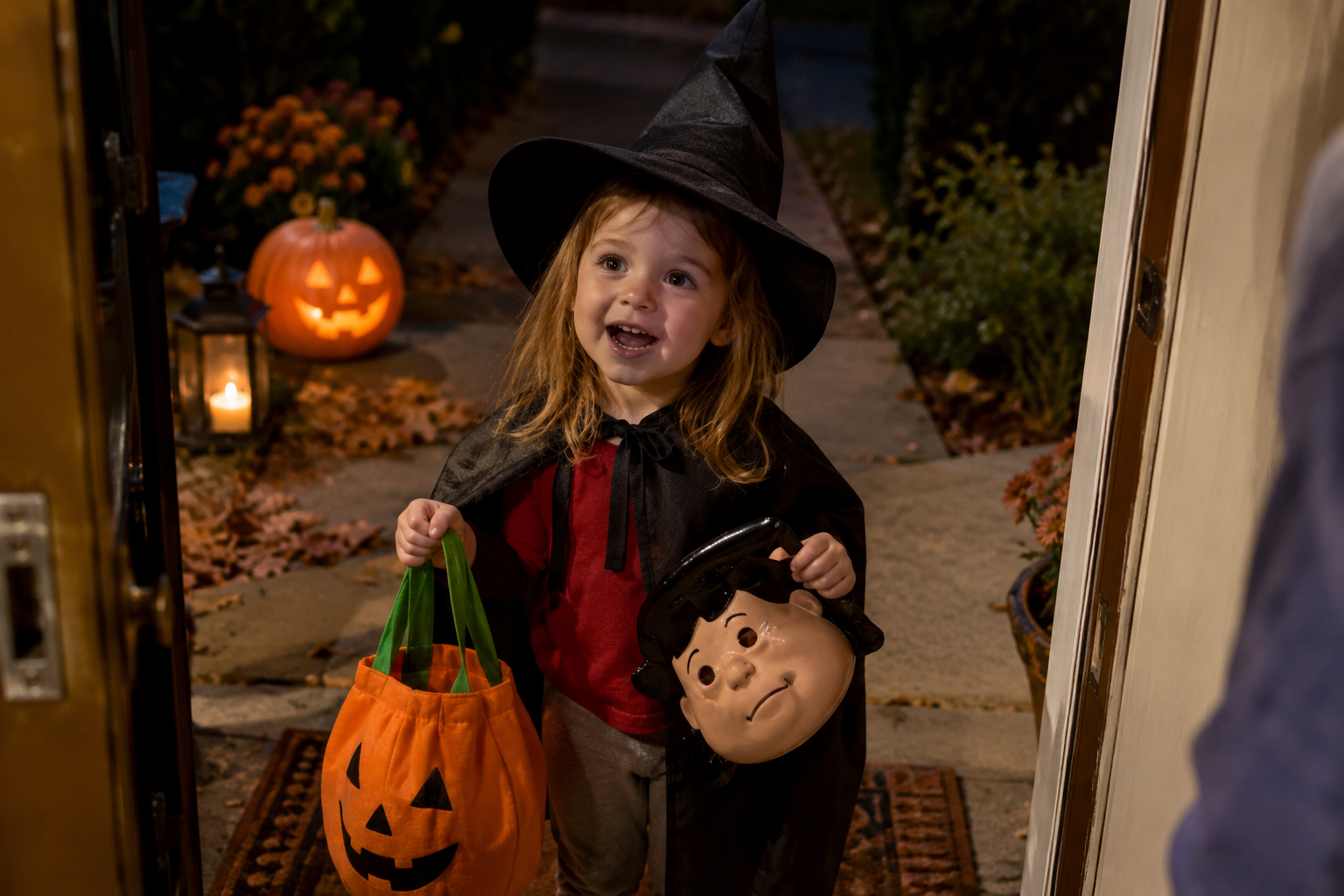
Big Feelings in Tiny Costumes

When Halloween Is a Lot for Little People

Back in May, we talked about “Tiny Feelings, Big Lessons” and the enormous emotions that can grow out of very small preschool moments: the wrong cup, a toy that gets taken, goodbye at drop-off, or a snack that doesn’t look the way it was supposed to.

Halloween takes that same emotional landscape and adds costumes, candy, decorations, strange noises, crowds, darkness, and approximately 47 opportunities to hear the phrase, “But I wanted to do it MYSELF!”

For young children, Halloween can be wonderful. It can also be a lot. And sometimes the biggest Halloween challenge isn’t the child who is afraid of the decorations. It’s the child whose parents love Halloween so much that they’ve accidentally planned the experience for a 35-year-old version of their child.

The Parent Who Has Been Waiting All Year

Some parents really love Halloween. Not “I buy a pumpkin in October” love. We’re talking about the people who have a Halloween playlist, a favorite spooky movie, a box labeled HALLOWEEN that somehow contains three additional boxes labeled HALLOWEEN, the 12-foot skeleton from Home Depot (or more than one!), and strong opinions about whether a pumpkin should be carved before or after October 15. 

If that’s you, excellent. Halloween is supposed to be fun, and I congratulate you on still loving it so dearly, and on passing those rituals down to the next generation. But it’s vital to remember that preschoolers are still discovering what fun means to them. Your child may eventually become the kid who wants to spend all of October decorating the house, dressing as something increasingly elaborate, and arguing passionately about the proper amount of fake spiderweb…

…or they may decide that pumpkins are terrific but costumes are suspicious. They may love ghosts, but hate masks. They may adore trick-or-treating, but want to go home after six houses. They may spend three weeks insisting they are going to be a dragon and then burst into tears when the dragon costume actually goes on.

That isn’t necessarily a failed Halloween. It may simply be their Halloween. Or, their first social-emotional understanding of Halloween.

The American Academy of Pediatrics recommends preparing young children for Halloween, practicing with costumes, watching for fears and anxieties, and being willing to stop early if the experience becomes too much. It even notes that if a young child doesn’t want to participate, that’s okay. There is always next year, and a year can make a surprisingly big difference at this age.

So if you’re a serious Halloween person, here’s the challenge: Don’t give your child your Halloween. Allow them to discover Halloween on their own. You can provide the pumpkins, the costumes, the decorations, and the spooky playlist. Then let your child decide which parts become magical.

The Halloween Paradox

This is the child who has been asking for a costume for three weeks.

“I want to be a witch!”

“Absolutely.”

“I want the hat!”

“Great.”

“And the cape!”

“Perfect.”

“And the broom!”

“We can do that.”

Then, Halloween arrives. The hat is wrong. The cape feels weird. The broom is too long. The shoes don’t match. And suddenly your tiny witch is lying on the floor screaming that HALLOWEEN IS RUINED. It is tempting to respond with: “But you wanted this!” Unfortunately, preschool brains don’t always care about the evidence.

The excitement of imagining something and the reality of experiencing it are different. A child can desperately want to dress up and then become overwhelmed once the costume is actually itchy, hot, restrictive, unfamiliar, or simply different from what they imagined.

This is where the same emotion-coaching approach from our May article comes in. Instead of immediately trying to solve the problem, start by acknowledging the feeling:

“You really wanted to wear this costume.”

“It doesn’t feel the way you thought it would.”

“You’re disappointed.”

Once the storm settles, you can figure out whether the cape needs adjusting, the costume needs changing, or the dragon needs to become a very comfortable dragon wearing sweatpants.

That’s not giving in. It’s helping a young child understand what is happening inside them.

Too Much Fun Can Still Be Too Much

Halloween is exciting, and that’s part of the problem.

Shared excitement is still a form of bonding, and young children are not always equipped to regulate a whole evening of it. There may be a preschool party in the morning, decorations everywhere, unfamiliar costumes, loud music, candy, neighborhood activity, a disrupted bedtime, and a parent who has been announcing for six weeks that TONIGHT IS THE NIGHT. A child can be having a wonderful time and still reach their limit.

That’s why preparation matters.

Talk about what will happen. Practice wearing the costume before Halloween. Explain that the scary-looking things are pretend. Think about when your child normally gets tired. Have a plan for going home. And don’t be afraid to use the plan.

The American Academy of Pediatrics (AAP) specifically recommends preparing young children for Halloween and being ready to pack it in early if a child becomes overwhelmed. In other words: You are allowed to leave the party before the child becomes a pumpkin-shaped emotional emergency.

But It’s Just a Costume!

To an adult, the vampire at the door is obviously Dad’s friend wearing a cape. To a preschooler, the information may be considerably less obvious.

Young children are still developing their understanding of appearance, reality, and pretend. Masks and costumes can make familiar people suddenly look unfamiliar, which can be confusing and frightening. ZERO TO THREE notes that young children can have difficulty reconciling unusual appearances with their understanding of what people normally look like.

So if your child backs away from Uncle Bob because Uncle Bob has transformed into a six-foot werewolf, “It’s just Uncle Bob!” may not solve the problem right away.

Try:

“That’s Uncle Bob under the costume.”

“You don’t have to go close.”

“We can watch from here.”

You don’t have to convince your child that something isn’t scary. You can help them feel safe while they decide what they think about it. Sometimes, that means approaching slowly. Sometimes, it means waving from across the room. Sometimes, it means spending the evening nowhere near Uncle Bob’s werewolf head. All three are legitimate Halloween strategies.

The Great Costume Meltdown

Then there is the costume itself. Parents see the adorable finished product. Children experience the tag. The zipper. The hat. The tights. The itchy seam. The bathroom logistics. The impossibility of sitting down. The fact that apparently nobody considered how difficult it would be to walk like a dinosaur while wearing dinosaur feet.

The AAP recommends trying costumes ahead of time and having a backup plan. It also recommends avoiding costumes that are too long or bulky for young children.

This is one place where enthusiastic parents can save themselves some heartache. Test the costume before Halloween. Let your child run in it. Sit in it. Use the bathroom in it. Wear the hat. Take the hat off. Try the whole thing again.

And if the grand costume you’ve lovingly assembled turns out to be deeply unpopular, remember: the goal is not to create the perfect photograph for the family scrapbook. The goal is for your child to have an experience they can enjoy. Sometimes the most successful costume is the one that stays on.

When the Candy Isn’t Really the Problem

Eventually, Halloween ends. This is frequently when things get interesting.

Your child has collected candy. They have walked farther than usual. They’re tired. They’re overstimulated. Their routine is gone. And now an adult dares to announce: “Okay, we’re going home.”

This can produce a reaction of biblical proportions. But the screaming may not really be about the candy. It may be about disappointment. It may be exhaustion. It may be the sudden transition from an extremely stimulating experience back to ordinary life. And it may be all three.

This is another opportunity to use the approach we talked about in May:

“You really wanted to keep going.”

“It was fun, and now it’s time to go home.”

“You’re disappointed.”

“I’m right here.”

The feeling can be completely valid while the boundary remains completely intact. Halloween doesn’t have to continue because your child is unhappy that it is ending. They can be disappointed. You can understand the disappointment. And you can still go home.

Let Halloween Be Whatever Halloween Is

This may be the hardest part for parents who genuinely love the holiday.

You have memories. You have traditions. You have ideas. You may have spent hours imagining your child experiencing Halloween exactly the way you did.

But your child isn’t a miniature version of you.

Maybe they love the costumes. Maybe they love the candy. Maybe they love carrying a pumpkin bucket around the neighborhood but aren’t remotely interested in trick-or-treating. Maybe they want to decorate every pumpkin in sight. Maybe they want to watch It’s the Great Pumpkin, Charlie Brown seventeen times. Maybe they want to wear pajamas and eat popcorn while everyone else goes out.

And maybe this year they are simply not ready.

That’s okay. The point isn’t to manufacture a perfect childhood memory on October 31. It’s to give your child enough safety, freedom, and support to begin making their own memories. That’s especially important for parents who have a serious love affair with Halloween. Your enthusiasm can open the door. It doesn’t have to decide what happens after your child walks through it.

Tiny Feelings, Bigger Costumes

Back in May, we talked about how preschoolers are practicing what it means to have feelings that are sometimes much bigger than their ability to manage them.

Halloween gives them a remarkable collection of feelings to practice with. Excitement. Fear. Anticipation. Disappointment. Pride. Overwhelm. Surprise. And sometimes the very confusing experience of saying, “I REALLY wanted this,” followed immediately by, “I HATE THIS.” That’s part of growing up.

Our job isn’t to make every feeling disappear. It’s to help children experience those feelings while knowing that someone safe is there with them.

So this Halloween, enjoy the costumes. Carve the pumpkins. Put out the decorations. Take the pictures. Play the spooky music. Just leave a little room in the celebration for your child to surprise you. The thing they love most may not be the thing you expected.

And if the evening goes sideways? You can always take off the costume, turn down the lights, get comfortable, and say: “I’ve got you. Let’s take a break.” Sometimes that is exactly what a tiny person in a very big costume needs.

If you’d like to discuss a place for your kids at Creekside Kids, click this embedded link to schedule an appointment. Let’s get to know each other! Like us on Facebook to follow our stories for news and updates. We’re located at 1201 W Cheyenne Road, Colorado Springs, CO 80906, and we can be reached at (719) 635-9111. Our hours of operation are 6:45 a.m. to 5:45 p.m., Monday through Friday.

Sources and Further Reading

  • CREEKSIDE KIDS: “Tiny Feelings, Big Lessons: Helping Preschoolers Navigate Their First Big Emotions”
  • American Academy of Pediatrics / HealthyChildren.org: “Easing Babies & Toddlers into Halloween Fun: 8 Tips for Parents”
  • ZERO TO THREE: Resources on young children’s fears, emotional regulation, and responding to overwhelming experiences… developmental guidance on young children’s understanding of appearance, reality, and unfamiliar costumes or characters.
  • Check out our older October blogs from Creekside Kids that you may have missed! 
    • Read “Autumn Magic”, for ideas about chilly weather fun in Colorado Springs. 
    • Check out “Keeping Halloween Fun and Safe for our Little Ones”, for safety tips on trick-or-treating in the ‘Springs. 
    • “Instilling a Love of Autumn in your Children” has some good ideas for parents anxious to share the fun of the season. 
    • “Explaining Halloween to your Kids” can help you show your kids that these rituals of fun have a gentle, benign meaning to them. 
    • “Why Playing With Costumes is Good for Children” is for parents who may be a little unsure if costumes on children are a good idea.
    • Wondering about the issues of letting kids play as Batman or The Hulk? “Superheroes at Play” dives into the pros and cons of letting kids be their favorite hero (or villain).

Filed Under: Parents Tips Tagged With: expectations, Halloween, rituals, Social-Emotional

August 9, 2025 by Christopher Hooker

Changes are Scary Things

Image created by ChatGPT


As the summer begins to turn to autumn, our co-learners prepare to say farewell to some of our friends as they transition to the upper level of preschool and into kindergarten. We know they’ll do great. We’ve put in considerable effort to make the transition less intimidating for them, and we know you have, too. Your thoughtful support and encouragement about how much they will enjoy their new classroom and new friends is key to their success.

The leap from child care to preschool and from preschool to Kindergarten is a significant one—not just for children, but for parents as well. What seems like a small change on the outside—new classroom, new teacher, new schedule—can feel monumental to a child. They may ask, Why is everything different? Where are the friends I know? Will my grownups still come back for me? And underneath those questions is often a quiet fear: Am I going to be okay here? Many children struggle with unspoken worries and fears regarding their transition, which may result in increased clingy-ness or whining. This is very normal, and a few children may act out in search of reassurance that their grown-ups will be reliable with rules and compassionate consequences.

As parents, we can help our children address those nagging fears, which children often lack the words for, not with lectures or logic, but with rituals—reliable, repeatable routines that quietly reassure our child, ‘Yes, you’re safe.’ Yes, this is okay. Yes, I’ll always come back.

Here are some thoughtful, heart-centered ways to ease the transitions of growing up using simple rituals that reassure and empower:

Create a Morning Goodbye Ritual

Instead of rushing through drop-off with a distracted “Bye, sweetie!” while juggling keys and coffee, try making the goodbye itself a special moment. A simple three-step ritual—like a hug, a high-five, and a silly wave through the window—gives your child something to count on.

Why it works: It creates a sense of control and predictability. It tells your child, I know this part is tricky. I’m here, and I’m doing it with you.

Use a Visual Calendar at Home

Create a kid-friendly calendar that indicates which days are “Preschool Days” and which days are “Home Days.” Add little stickers or drawings to mark fun events, such as show-and-tell or library day.

Why it works: It demystifies time. Instead of the scary unknown, school becomes something they can “see” coming and going.

Bring Familiar Comforts Along

Let your child choose a “transition object” like a small stuffed animal, a photo of your family, or a charm they can keep in their backpack or cubby.  For some, a chewy pendant on a necklace can really help alleviate anxiety.

Why it works: These items serve as emotional anchors—a quiet reminder that home is always nearby.

Make After-School Connection Rituals

Whether it’s a snack picnic in the park, reading a special book together, or just singing a favorite song in the car, create a “reconnection ritual” for after pickup. Let your child look forward to that moment as part of their school day.

Why it works: It reinforces the idea that separation is temporary, and reunions are joyful.

Play “Pretend Preschool/Kindergarten” at Home

Act out the school day together with dolls, stuffed animals, or dress-up props. Practice saying goodbye, sitting at circle time, and even making new friends. You can even pretend to be the nervous student—and let your child play the reassuring adult!

Why it works: Play is how children process big emotions. This kind of imaginative rehearsal builds confidence and resilience.

Keep a Steady Routine—But Be Flexible With Emotions

Children thrive with routine, especially during times of transition. But emotions will still come—tears, clinging, or even regressions. That’s okay. Acknowledge their feelings gently without trying to “fix” them too fast. Try saying:

“It’s okay to miss your old classroom. Big changes can feel hard. But guess what? You’re strong, and we’re in this together.”

Celebrate the “Firsts”

Your child’s first day of preschool is a milestone. Take a photo, pack a special lunch, write a little note, or share a story about your first day of school. Make it meaningful.

Why it works: Framing the transition as a celebration, rather than a loss, gives your child pride and ownership of this next significant step.

Transitions Don’t Have to Be Traumas

What makes transitions feel scary to children is the uncertainty. Rituals—especially when repeated with love and care—remove that uncertainty. They give your child a gentle bridge between the world they know and the new one they’re stepping into.

So don’t worry if the first few weeks come with tears or clinging. That’s normal. With time, consistency, and a few meaningful rituals, you’ll help your child not only survive the preschool transition—but thrive in it. You’ve got this. And so do they. 

If you’d like to discuss a place at Creekside Kids for your kids, we invite you to click this embedded link to schedule an appointment. Let’s get to know each other! Like us on Facebook to follow our stories for news and updates. We’re located at 1201 W Cheyenne Road, Colorado Springs, CO 80906, and we can be reached at (719) 635-9111. Our new hours of operation are 6:45 a.m. until 5:45 p.m., Monday through Friday.

Filed Under: Uncategorized Tagged With: Kindergarten Anxiety, rituals

May 2, 2025 by Christopher Hooker

Cherishing Little Moments: Creating Meaningful Memories at the End of the School Year

Photo by Kristyna Squared.one on Unsplash

As the school year comes to a close, you may find yourself experiencing a bittersweet feeling. The year seems to have flown by! This is a wonderful time to breathe in the summertime ahead, celebrate accomplishments, and reflect on how much our children have grown since those first steps into their classroom months ago. 

This season serves as a gentle reminder of the fleeting nature of time. Someday, the same child whose tiny hand you once held on the first day of school will be packing for college, moving out for their first job, or simply heading off to forge their own path—and you might find yourself wondering, “Where did the time go?”. The old saying is that ‘the days are long but the years are short’ is so true. 

As parents and caregivers, handling these emotional moments is part of the beautiful journey of growing alongside our children. The end of the school year offers an exceptional opportunity to celebrate growth and create something tangible that helps preserve the memories we’re making along the way. For some of you, that begins in the coming school year as your child begins kindergarten; why not turn the tradition of cleaning out your child’s backpack into an annual ritual with purpose?

Turn Bookbag Clutter into Treasured Keepsakes

When your little one empties their backpack at the end of the school year, you’ll likely uncover a treasure trove of their year’s work: colorful drawings, crayon-filled worksheets, encouraging notes from teachers, and maybe even a few scribbled moments of creativity that only a child could bring to life. Instead of tossing these into the recycling bin, consider creating a scrapbook that captures your child’s early school days year by year.

Collect the highlights—the assignments that made them proud, the art showing their creativity blossoming, or even the moments that made you laugh. Include photos, if you can, like their first-day-of-school picture or snapshots from field trips and classroom parties. If you’re short on time, even collecting one or two special pieces each year can create a meaningful scrapbook by the time they graduate.

And you can start now– with the artwork your child produces here at Creekside Kids.  Consider adding in photographs and locks of hair from their haircuts. This treasure trove you will transform as they transform, becoming an echo of how you experienced their childhood.

To make this process even sweeter, involve your child. For younger kiddos, let them tell you which drawings or projects they’re most proud of. Older children might even want to jot down a favorite memory to include. By working together, you’ll turn this end-of-year task into something much more meaningful: a celebration of their accomplishments and dreams and another ritual within the family as you put away the old school year and prepare for the new one. This ritual gives you a moment to reflect with your child on the things they have learned and who they are becoming in the course of their life.

A Gift for the Road Ahead

The beauty of this yearly ritual is that it puts both the past and future into perspective. When that moment arrives—years from now—and your child is ready to step into the next significant chapter of their life, you’ll already have a heartfelt gift to remind them how far they’ve come and how much you’ve cherished every step of the journey.

Imagine handing your child that scrapbook on the day they leave for college or perhaps on their graduation day. As they flip through pages filled with their younger self’s art, words, and triumphs, they’ll be reminded, in a very tangible way, of just how deeply loved and supported they’ve been all along.

Here’s a resource if you need a little help getting on step with scrapbooking: Easy Scrapbooking for the Busy Mom.

Taking Time to Soak It All In

It’s easy to get caught up in the busyness of life with seasons that come and go in a flurry. The end of the school year can serve as a quiet reminder to slow down, acknowledge how far your family has come together, and treasure the simple joys of childhood while they’re still unfolding. At Creekside Kids, we know that creating meaningful moments out of the everyday builds a foundation of love, curiosity, and connection that will last a lifetime.

The years may pass us by quickly, but by preserving memories and celebrating your child’s unique story, you’ll create a keepsake worth holding onto and giving away—and a tradition that reminds you both of the incredible journey you’re sharing. Here’s to another year of growth, joy, and endless possibilities. 💕

At Creekside Kids, we love celebrating these milestones with our community because we truly believe in the importance of building joyful, lasting memories for every family. If you’d like more ideas for creating traditions that matter or celebrating the little moments in your child’s early learning years, don’t hesitate to connect with us. We’re here to walk alongside you every step of the way!

If you’d like to discuss a place at Creekside Kids for your kids, we invite you to click this embedded link to schedule an appointment. Let’s get to know each other! Like us on Facebook to follow our stories for news and updates. We’re located at 1201 W Cheyenne Road, Colorado Springs, CO 80906, and we can be reached at (719) 635-9111. Our new hours of operation are 6:45 a.m. until 5:45 p.m., Monday through Friday.

Filed Under: Parents Tips Tagged With: End of year, Memories, rituals, Scrapbooking

November 1, 2024 by Christopher Hooker

The Importance of Holiday Traditions

Image by KatrinDitrih from Pixabay

As the holiday season approaches, our hearts fill with joy, warmth, and anticipation. Autumn-Winter holidays like Thanksgiving, Chanukah, Ramadan, Christmas, Kwanzaa, and New Year’s Eve hold a special place in our lives and offer us opportunities to create core life memories with our children. 

Did you know that holiday traditions are more than just joy and celebrations? They play a significant role in your child’s early learning and development, providing a sense of structure, fostering emotional bonds, and instilling important values.

Building a Sense of Family Structure

As parents, you play a crucial role in building a sense of family structure through holiday traditions. Whether it’s baking cookies together, sharing a meal, or decorating the Christmas tree, these rituals provide a sense of continuity and belonging, helping your children understand their place within the family.

Developing Emotional Bonds

Participating in family traditions is not just about the activities, it’s about strengthening emotional bonds between family members. When children see their parents and caregivers engaging in these special activities with joy and enthusiasm, they learn the value of spending quality time together. These shared experiences foster love and security, which are fundamental to a child’s self-worth.

Instilling Values and Traditions

Holiday traditions are rich with opportunities to teach children important values such as gratitude, generosity, and compassion. For example, we can involve our little ones in activities emphasizing thankfulness and giving back to the community during Thanksgiving. These lessons, embedded in joyful occasions, leave a lasting impression on young minds.

Encouraging Lifelong Memories

The sights, sounds, and smells of holiday traditions often become cherished memories that children carry into adulthood. These positive recollections contribute to a child’s sense of identity and family heritage, offering comfort and connection across generations.

One of the most priceless gifts we can give our children is a treasure trove of joyful memories. The sights, sounds, and smells of holiday traditions often stick with us long into adulthood. These positive recollections contribute to a child’s sense of identity and family heritage, offering comfort and connection across generations.

Ideas for Meaningful Traditions

If you’re looking to start or enhance your family’s holiday traditions, here are a few simple ideas:

Family Storytime: Select a special story you read together every autumn and winter. Collect seasonal books your family loves and establish a cozy reading-time tradition, complete with blankets and hot cocoa. Over time, your child will look forward to revisiting the story and its familiar characters.

Crafting Together: Create homemade ornaments or decorations. It’s a beautiful way for children to express their creativity while contributing to the family’s festive atmosphere. Get crafty with your little ones by making homemade holiday decorations. From handprint turkeys for Thanksgiving to homemade ornaments for the winter holidays, these crafts can become annual keepsakes you’ll cherish for years. 

Exploring Nature: Take a family walk to admire seasonal changes. Bundle up and head outdoors for a nature walk. Collect leaves, acorns, and other natural treasures in the fall to create crafts or decorations. 

Holiday Light Tour: Take a scenic drive or walk around the neighborhood to appreciate the twinkling lights and decorations during the winter. You can even turn it into a scavenger hunt for added excitement! Make this an annual outing with hot chocolate and holiday music to enhance the experience.

Advent Calendars: Manufacturers make Advent calendars for multiple holidays– there’s even a Halloween one. Each new opening of a door brings excitement and anticipation to your child’s day.

Gratitude Jar: Create a gratitude jar where each family member writes down what they’re thankful for. Share these moments of gratitude during Thanksgiving, preventing the need for your guests to conjure up what they’re thankful for when they’re on the spot. Remembering to use this jar throughout the year will teach your children the importance of appreciation and mindfulness.

Family Cooking Day: Dedicate a day prior to your family’s favorite holidays solely to cooking and baking together as a family. Preparing traditional meals or trying out new recipes can be a fun way to bond and create delicious memories. Plus, little hands can help with simple tasks, fostering teamwork in the kitchen. Cooking is an especially good medium for creating memories, as it combines wonderful smells with delicious treats.

Community Service: Involve your family in giving back to the community. Volunteer at a local food bank, participate in a holiday toy drive or make cards for nursing home residents (or visit one with the staff’s permission). Teaching your children about kindness and generosity is a beautiful tradition that can grow year after year.

Outdoor Movie Night: Set up an outdoor movie night with warm blankets, popcorn, and a favorite holiday film. If it’s too chilly, transform your living room into a cozy movie theater instead. The magic of family movie night can become a cherished tradition.

Reflection and Goal Setting: Hold a reflective family meeting where everyone shares their highlights of the past year. Discuss goals and aspirations for the coming year, helping each family member set intentions together. This practice not only fosters communication but also strengthens family bonds.

At Creekside Kids, we believe in the profound impact of traditions and rituals on a child’s development. These practices help children learn about their family’s unique culture, create a sense of stability, and nurture loving relationships. As we celebrate this holiday season, let’s cherish these moments and the excellent learning opportunities they bring to our little ones.

Thank you for being a part of our Creekside Kids community. We wish you all a happy and heartwarming holiday season filled with love, joy, and cherished traditions. If you’d like to discuss a place at Creekside Kids for your kids, we invite you to click this embedded link to schedule an appointment. Let’s get to know each other! Like us on Facebook to follow our stories for news and updates. We’re located at 1201 W Cheyenne Road, Colorado Springs, CO 80906, and we can be reached at (719) 635-9111. Our new hours of operation are 6:45 a.m. until 5:45 p.m., Monday through Friday. 

Filed Under: Parents Tips Tagged With: holidays, rituals, traditions

Location & Hours

creekside building
CREEKSIDE KIDS
1201 W Cheyenne Rd
Colorado Springs, CO 80906
(719) 635-9111
 
6:30 am - 5:45 pm
Monday - Friday

Sign Up for Updates

  • This field is for validation purposes and should be left unchanged.

Follow Us

  • Facebook
  • Pinterest

Events and Updates

  • Events
  • Latest Updates
  • News
  • Parents Tips
  • Uncategorized
Thank you to all of your wonderful teachers! Athima loves camp every summer. And she learns so much. She will be sad that it is the end. But hope to see you next summer!
Stockinger Family
Dear Creekside Staff, Thank you so much for taking such amazing care of Grace this past year. It means so much to me knowing she was in such wonderful hands and she was so happy there with you. We wish you a wonderful summer and hope to stay in touch. Thank you for everything!
Kimnach Family
Creekside teachers, Thanks for another great year of helping our kids “spread their wings”. You are a wonderful caring group of teachers!
John
Dear Jennifer and Veronica, dear everybody at Creekside Kids! Thank you so much for being wonderful leaders, so caring and fun!
Christopher and Family
Dear Creekside, Thank you for allowing Hanna Grace to borrow books, and for taking care of  my  sweet girl!  
Gina
Veronica, Jennifer, Chris, Libby, Melinda and the team I missed. Thank you so much! We will miss the love, fun and guidance (to us both!) of the Creekside Family!
Julie and Sofia Di Gerlando
Thank you so much for everything! You guys are great with kiddos and we would recommend you to anyone. We’ll miss you and we appreciate the time Eli had here. Thanks!
The Wilson Family
Thank you for the wonderful two years at Creekside. We have always felt safe and secure and have enjoyed all the fun and educational activities. We will miss you as Nick moves on to Kindergarten.
Elizabeth, Joe and Nicholas

Our Supporters

Blue Skies Exploration Academy
Alliance for kids
It's Fundamental
Cheyenne Mountain School District

Location & Hours

creekside building
1201 W Cheyenne Rd
Colorado Springs, CO 80906  
 
6:30 am - 5:45 pm
Monday - Friday
(719) 635-9111

Follow Us

  • Facebook
  • Pinterest
  • YouTube

Affiliates

Alliance for Kids
Blue Skies Exploration Academy
Cheyenne Mountain School District
It's Fundamental
Synergy Dance

Testimonials

Veronica, Jennifer, Chris, Libby, Melinda and the team I missed. Thank you so much! We will miss … Read more
Julie and Sofia Di Gerlando
Read more...
Dear Jennifer and Veronica, dear everybody at Creekside Kids! Thank you so much for being wonderful … Read more
Christopher and Family
Read more...
Thank you so much for everything! You guys are great with kiddos and we would recommend you to anyon… Read more
The Wilson Family
Read more...
Creekside teachers, Thanks for another great year of helping our kids “spread their wings”. You a… Read more
John
Read more...
Thank you to all of your wonderful teachers! Athima loves camp every summer. And she learns so much.… Read more
Stockinger Family
Read more...
Dear Creekside Staff, Thank you so much for taking such amazing care of Grace this past year. It … Read more
Kimnach Family
Read more...
Dear Creekside, Thank you for allowing Hanna Grace to borrow books, and for taking care of  my … Read more
Gina
Read more...
Thank you for the wonderful two years at Creekside. We have always felt safe and secure and have enj… Read more
Elizabeth, Joe and Nicholas
Read more...

CREEKSIDE KIDS 1201 W Cheyenne Rd Colorado Springs, CO 80906 (719) 635-9111

Copyright 2026 Creekside Kids All Rights Reserved.
  • Email Login
  • Disclosures
  • Sitemap
  • Powered By Local Child Care Marketing
  • Contact Us
  • Updates Simplified