Helping Preschoolers Handle the Holiday In-Between
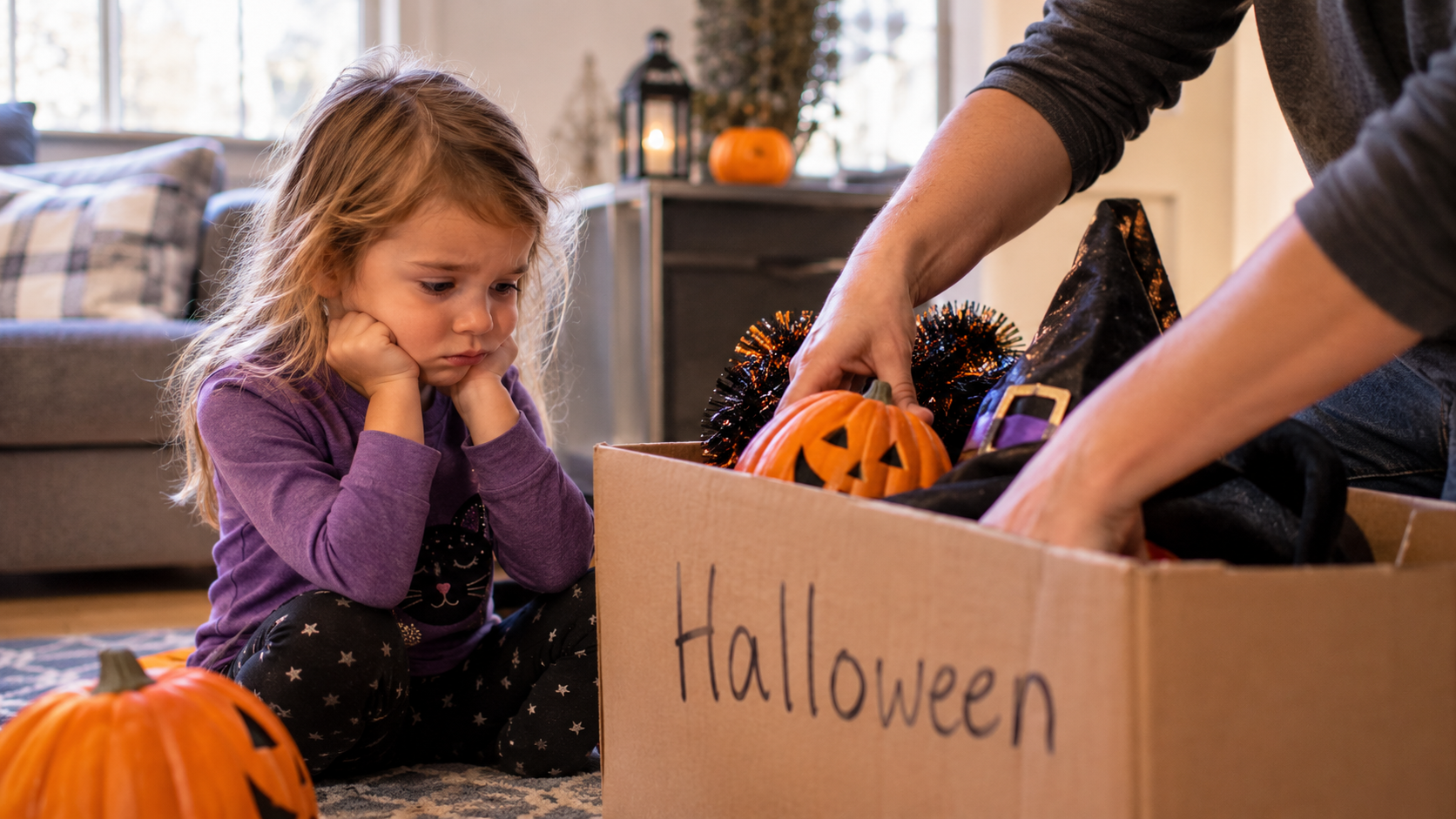
A peculiar little stretch of the calendar arrives every November. Halloween is over. The costumes have been put away, the candy supply is dwindling, and the pumpkins are beginning to look less festive and more like something that should probably be handled with gloves.
And just as the last pumpkin has its candle blown out, the stores begin inundating us with Christmas merchandise, holiday promotions, and reminders that the next big celebration is already on its way.
For adults, the transition is fairly straightforward. We pack up the Halloween decorations, start thinking about Thanksgiving, and plan the weeks ahead. For a preschooler, however, it can be confusing.
Yesterday, the neighborhood was full of pumpkins, costumes, candy, and exciting things happening after dark. Today, the decorations are gone. The candy bowl is empty. And the next big celebration seems to be somewhere in the distant future. Meanwhile, every trip to the grocery store brings another reminder that something even bigger is coming.
Children this age are still learning how time works, how to wait for something they want, and how to manage the disappointment that comes when an exciting experience ends. They may not understand that Thanksgiving is only a few weeks away, much less that Christmas is coming after that. They simply know that something wonderful has stopped happening, and something else seems to be taking forever.
This is where parents can help. Not by trying to replace Halloween with another celebration immediately, but by helping children find comfort, enjoyment, and a little predictability in the days between.
1. Don’t Rush to Replace Halloween
Think about how much anticipation goes into Halloween. Children talk about costumes, watch decorations appear around the neighborhood, visit pumpkin patches, attend parties, and hear adults discussing the big night. For weeks, the excitement builds.
Then, suddenly, it’s over. A child might ask when they’re going trick-or-treating again, insist that the Halloween decorations stay up, or become upset when a favorite pumpkin is thrown away.
Sometimes disappointment comes out as frustration. Sometimes it’s sadness. Sometimes it’s a seemingly unrelated meltdown over the wrong breakfast bowl. Remember that children don’t always have the words to explain what they’re feeling. What looks like an unreasonable reaction may be a very real disappointment.
Instead of brushing it off with “Halloween is over,” try acknowledging the feeling:
- “You really loved Halloween, didn’t you?”
- “It’s hard when something fun comes to an end.”
- “You wish we could keep the decorations up a little longer.”
- “I miss some of those fun things, too.”
Acknowledging disappointment doesn’t mean you have to change your decision or bring Halloween back. It simply lets your child know that their feelings make sense. And there’s no need to rush into the next big thing.
Children benefit from having time to process an experience, remember what they enjoyed, and gradually move on. You might look at Halloween pictures together, talk about a favorite costume, or let your child help put away the decorations.
You can even preserve one small reminder of the holiday if it makes the transition easier. Maybe a favorite pumpkin stays on the porch a little longer, or the costume gets put away in a special place for next year. The important thing is not to treat every ending as a problem to solve by immediately introducing something new.
Halloween can be over without the fun being over.
2. Give November Its Own Little Traditions
One of the most helpful things parents can offer during a transition is something children already know and can count on. That’s where routines and rituals come in. They are related, but they aren’t quite the same thing.
A routine is something we do regularly. A ritual adds a little meaning. Brushing teeth before bed is a routine. Reading a favorite story, sharing one good thing about the day, and giving a special goodnight hug can turn bedtime into a comforting ritual.
The Centers for Disease Control and Prevention explains that predictable routines help children feel safe because they know what to expect. The American Academy of Pediatrics also recommends protecting familiar family routines during busy holiday periods, including regular sleep, meals, and opportunities to unwind.
For preschoolers, this doesn’t require a complicated schedule or a color-coded family calendar. It can be as simple as:
- Reading a favorite book before bedtime.
- Having breakfast together before getting ready for the day.
- Taking a regular afternoon walk.
- Singing the same cleanup song before putting toys away.
- Having a special family dinner on Friday nights.
These everyday patterns provide a steady foundation when other things change. And November is a particularly good time to lean into them. After weeks of costumes, parties, special treats, and unusual schedules, returning to familiar rhythms can help children settle back into everyday life. But routines don’t have to be the only familiar things in a child’s week. Small family rituals can give November its own identity, without turning every day into another major event.
A few possibilities:
The First Cozy Friday: Pick one evening each week for pajamas, popcorn, and a family movie or story.
The Thankful-at-Dinner Tradition: Each person shares one thing they enjoyed that day. Keep it simple. A favorite toy, a good snack, or playing with a friend absolutely counts.
The Weekend Baking Project: Make muffins, cookies, or another family favorite together. Children can help stir, measure, and decorate.
The November Nature Walk: Take a regular walk to look for changing leaves, interesting rocks, birds, or signs of winter approaching.
Guess Who’s Coming to Thanksgiving?: Make a Face Match game of the relatives who will be coming in. This builds their excitement to see them come, and is an added treat for your guests when they’re recognized!
The Thanksgiving Countdown: Instead of focusing only on the big holiday, mark the days with small activities such as drawing pictures, making decorations, or choosing a family recipe.
These rituals don’t need to be elaborate. In fact, their value often comes from being simple enough to repeat.
The point isn’t to create another holiday that competes with Halloween. It’s to give children something familiar and enjoyable to look forward to.
And perhaps most importantly, it’s to show them that ordinary days can have their own special moments.
3. Be Careful What You Promise
Here’s where November gets particularly tricky. As children adjust to the end of Halloween, the holiday advertising machine starts warming up. Suddenly, every store has Christmas trees, every television commercial features a new toy, and every shopping trip seems to introduce another thing a child absolutely must have.
For adults, these are reminders that the holiday season is approaching. For young children, they can become a growing collection of expectations.
A preschooler may not understand the difference between seeing a toy advertised, wanting that toy, putting it on a wish list, and actually receiving it. The distinction between what might happen and what will happen is still developing.
And children can become very attached to an idea once they’ve imagined it.
If a parent says, “Maybe we’ll go see the holiday lights this weekend,” a child may hear, “We are definitely going to see the holiday lights this weekend.”
Then it rains. Someone gets sick. Plans change. Suddenly, the family faces a disappointment that might have been avoided with a little more careful wording. Try distinguishing between three kinds of plans:
We hope: We might visit the holiday lights this weekend.
It’s possible: We could make cookies if we have time.
We know: We will read our bedtime story tonight.
This may sound like a small distinction, but it gives children a clearer picture of what to expect.
It also helps to be thoughtful about how much holiday excitement children encounter. You don’t have to avoid every Christmas display or commercial, but you can limit the constant stream of advertisements and resist the temptation to turn every new product into something your child needs to have.
A helpful article from Fairfax County’s Family Services points out that relentless toy marketing can contribute to unrealistic gift expectations and long wish lists. Their advice includes emphasizing family traditions, making things together, and focusing on time spent with loved ones rather than simply accumulating presents.
The same principle applies to holiday activities. You don’t have to promise a trip, a party, a special toy, or a new experience every time something catches your child’s attention. You can say:
- “That’s something we can put on your wish list.”
- “I don’t know if we’ll be able to do that, but we can talk about it.”
- “We’re planning to visit Grandma on Thanksgiving. We haven’t made plans for the weekend yet.”
- “We can enjoy looking at the decorations without needing to buy everything we see.”
When something is uncertain, say so. When something is definite, make every reasonable effort to follow through. And when plans change, explain what happened in simple language.
“You were looking forward to visiting the lights. I’m disappointed, too. The weather isn’t safe for driving tonight, so we’re going to stay home. Let’s find another evening.”
Children won’t always like the answer. That’s okay. Learning that plans sometimes change is part of learning how to navigate the world.
4. When Things Don’t Go the Way They Hoped
Even with careful planning, children will experience disappointment.
The Thanksgiving craft doesn’t turn out the way they imagined. A favorite relative can’t visit. The family has to leave a gathering early. The promised dessert isn’t available.
These moments can be difficult, but they also offer opportunities to practice handling feelings. The instinct to make everything better immediately is understandable. Parents don’t enjoy watching their children feel sad.
But we don’t have to rescue children from every disappointment. Instead, we can help them work through it. Try a simple sequence:
- Acknowledge the feeling.
“You really wanted to make that turkey look different. You’re disappointed.”
- Give the feeling a little room.
You don’t have to offer a solution immediately. Sometimes children need a moment to be unhappy before they’re ready to consider what comes next.
- Offer a realistic choice.
“Would you like to try again with another piece of paper, or would you rather take a break?”
- Help them recognize what they can still enjoy.
“The craft didn’t turn out the way you wanted, but we can still make something together.”
The goal isn’t to convince children that everything is wonderful when it isn’t. It’s to help them discover that disappointment doesn’t have to end the entire experience. They can be disappointed and still have a good afternoon. They can miss Halloween and still enjoy November. They can look forward to Thanksgiving without needing every day between now and then to feel like a celebration. That’s an important lesson.
If you’d like to discuss a place for your kids at Creekside Kids, click this embedded link to schedule an appointment. Let’s get to know each other! Like us on Facebook to follow our stories for news and updates. We’re located at 1201 W Cheyenne Road, Colorado Springs, CO 80906, and we can be reached at (719) 635-9111. Our hours of operation are 6:45 a.m. to 5:45 p.m., Monday through Friday.
Sources and Further Reading
- Centers for Disease Control and Prevention: “Tips for Relying on Routines and Rules.” Guidance on consistency, predictability, and helping children understand changes in their daily routines.
https://www.cdc.gov/parenting-toddlers/structure-rules/index.html - American Academy of Pediatrics / HealthyChildren.org: “Comfort & Joy: Tips to Reduce Family Stress & Support Kids’ Mental Health.” Advice on protecting family routines, managing busy schedules, and making room for rest during the holidays.
https://www.healthychildren.org/English/family-life/family-dynamics/Pages/comfort-and-joy-family-tips-for-enjoying-the-winter-holidays.aspx - Cornell Cooperative Extension: “Keeping the Holidays Calm for Young Children.” Discusses children’s sense of time, long periods of anticipation, commercial pressure, and the value of simple celebrations and familiar routines.
https://warren.cce.cornell.edu/family-community/parent-pages/babies-young-children/keeping-the-holidays-calm-for-young-children - Fairfax County Family Services: “Managing Children’s Holiday Gift Expectations.” Practical suggestions for handling toy marketing, wish lists, and the pressure to make holidays about presents rather than family experiences.
https://www.fairfaxcounty.gov/familyservices/community-corner/managing-childrens-holiday-gift-expectations - American Academy of Pediatrics / HealthyChildren.org: “Holiday Fun & Family Meaning: Connecting Our Lives.” Ideas for building meaningful family traditions through shared activities, stories, and time together.
https://www.healthychildren.org/English/family-life/power-of-play/Pages/ways-to-make-meaning-for-your-family-through-holiday-traditions.aspx
 1201 W Cheyenne Rd